
You are using an out of date browser. It may not display this or other websites correctly.
You should upgrade or use an alternative browser.
You should upgrade or use an alternative browser.
Political Talk Forum
- Thread starter Wolf
- Start date
- Status
- Not open for further replies.

memebag
Top Brass, ADVP
Okey doke, let's match extreme stories. I'll pick one from Breitbart, you pick an equivalent atrocity from HuffPo.to me huffpo and breitbart seemed very similar in their extreme positions at least during this election cycle.
Birth Control Makes Women Unattractive and Crazy

JHDK
Release Robin's Bra
thats an article by milo who is an alt-right entertainer. ok so you win if we are going by headlines alone. huffpo did make a big stink about only covering trump in their entertainment section during the election and also ran that silly disclaimer at the bottom of every story about him.
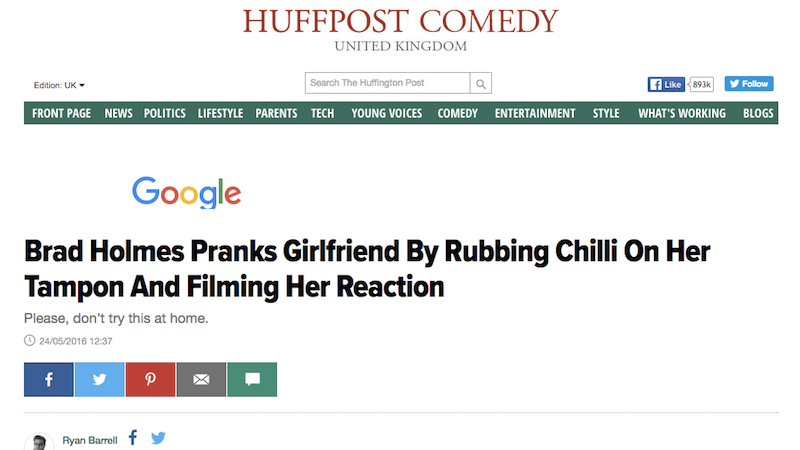
HuffPo Publishes, Deletes Video of Man Secretly Rubbing Chili on Girlfriend's Tampon
HuffPo Publishes, Deletes Video of Man Secretly Rubbing Chili on Girlfriend's Tampon
JHDK
Release Robin's Bra
check out these pics:

if you rotate and zoom in on the paper in kris kobach's hand it's a DHS plan outline for the first year.

Trump Set to Meet Today With Kris Kobach, Christie, Giuliani and Others - ABC News
if you rotate and zoom in on the paper in kris kobach's hand it's a DHS plan outline for the first year.
Trump Set to Meet Today With Kris Kobach, Christie, Giuliani and Others - ABC News

scotchandcigar
All I wanted was some steak
Strategic Plan
1. Destroy Country
2. Buy low
3. Sell high
1. Destroy Country
2. Buy low
3. Sell high


memebag
Top Brass, ADVP
This is pretty interesting:
We Tracked Down A Fake-News Creator In The Suburbs. Here's What We Learned : All Tech Considered : NPR
Part of me wants that story to be fake.
We Tracked Down A Fake-News Creator In The Suburbs. Here's What We Learned : All Tech Considered : NPR
Part of me wants that story to be fake.
scotchandcigar
All I wanted was some steak
This is pretty interesting:
We Tracked Down A Fake-News Creator In The Suburbs. Here's What We Learned : All Tech Considered : NPR
Part of me wants that story to be fake.
From the article:
"During the run-up to the presidential election, fake news really took off. Anybody with a blog can find a big Facebook group of rabid Trump supporters just waiting to eat up this red meat. But this isn't just a Trump-supporter problem. This is a right-wing issue. We've tried to do similar things to liberals. It just has never worked, it never takes off. You'll get debunked within the first two comments and then the whole thing just kind of fizzles out."
So when people say, "well, both sides do it", I call bullshit.
memebag
Top Brass, ADVP
Yeah, I think some people just lack the ability to check whats's behind a headline they happen to see on some feed. It seems to happen a lot around celebrity deaths.From the article:
"During the run-up to the presidential election, fake news really took off. Anybody with a blog can find a big Facebook group of rabid Trump supporters just waiting to eat up this red meat. But this isn't just a Trump-supporter problem. This is a right-wing issue. We've tried to do similar things to liberals. It just has never worked, it never takes off. You'll get debunked within the first two comments and then the whole thing just kind of fizzles out."
So when people say, "well, both sides do it", I call bullshit.
scotchandcigar
All I wanted was some steak
And F you too.Yeah, I think some people just lack the ability to check whats's behind a headline they happen to see on some feed. It seems to happen a lot around celebrity deaths.

Speaking of which, I was at a party last night, where people started sharing the idea that Mickey Rooney just died (in addition to Florence Henderson). Did I go right to DRC and erroneously post it? No. Because I've realized that many of the people I know are idiots. It's an important life lesson.
JHDK
Release Robin's Bra
Yeah, I think some people just lack the ability to check whats's behind a headline they happen to see on some feed. It seems to happen a lot around celebrity deaths.
i don't think it's lacking the ability, i think it's more about seeing something they think probably could be true and not bothering to check any other sources to see if it actually is. also how do you get metrics on how many people believe this stuff or just think of it as national enquirer type gossip. the article talks about the stories being shared 500k times but that says nothing about who those people were or why they shared it.
the censoring fake news talk is a bit disturbing though. from the article it seems that google is just pulling ads from those types of sites but facebook has been talking about much more proactive steps.
JHDK
Release Robin's Bra
And F you too.
Speaking of which, I was at a party last night, where people started sharing the idea that Mickey Rooney just died (in addition to Florence Henderson). Did I go right to DRC and erroneously post it? No. Because I've realized that many of the people I know are idiots. It's an important life lesson.
that's actually kinda sad. i picture a puppy that has been hit with rolled up newspapers so often that they cower when they see anyone pick up a paper.

scotchandcigar
All I wanted was some steak
OK, in that analogy, am I the puppy? Or are the people around me the puppies? I'm very confused.that's actually kinda sad. i picture a puppy that has been hit with rolled up newspapers so often that they cower when they see anyone pick up a paper.
memebag
Top Brass, ADVP
i don't think it's lacking the ability, i think it's more about seeing something they think probably could be true and not bothering to check any other sources to see if it actually is.
So they are able to think critically, but they refuse to do so? For what possible reason? Laziness? If so, distinction without a difference.
also how do you get metrics on how many people believe this stuff or just think of it as national enquirer type gossip. the article talks about the stories being shared 500k times but that says nothing about who those people were or why they shared it.
You get metrics from the number of times the story is shared. You analyze those metrics through experimentation. I'm sure someone could establish ratios for the number of people who believe it vs the number who share it for some other reason.
the censoring fake news talk is a bit disturbing though. from the article it seems that google is just pulling ads from those types of sites but facebook has been talking about much more proactive steps.
True. There is no magic algorithm to categorize accurate news, honestly mistaken news and deliberate deception.
JHDK
Release Robin's Bra
1. So they are able to think critically, but they refuse to do so? For what possible reason? Laziness? If so, distinction without a difference.
2. You get metrics from the number of times the story is shared. You analyze those metrics through experimentation. I'm sure someone could establish ratios for the number of people who believe it vs the number who share it for some other reason.
1. everyone who has the ability to read a news story on facebook also has the ability to check if it's real. i think that most people see the story, think something like "yea that mostly fits what i already think" and then just go about their day without bothering to look it up else ware. so yea laziness. and i do think the is a difference btw/laziness and lack of ability. but then again all of this is assuming people take this fake news as at least semi fact to begin with.
2. i admit i have not done serious research into this fake news issue but of the articles i've read since it became a big story none seem to present much more than # of times these stories were shared to support their idea that this is an epidemic of gullibility. i'd like to see these ratios you speak of because like i said an RT or a share does not necessarily mean the people doing it are believers in the content.
Last edited:

IdRatherBeSkiing
Sherbert is NOT and NEVER WILL BE ice cream.
I just stick with reliable news sites like the onion or the Beaverton for my news rather than Facebook.
Sent from my iPhone using Tapatalk
Sent from my iPhone using Tapatalk
scotchandcigar
All I wanted was some steak
^This.i think that most people see the story, think something like "yea that mostly fits what i already think" and then just go about their day without bothering to look it up
Studies have shown that by the age of 25 or so, a person's political orientation is set. They then spend the rest of their lives looking for articles that reinforce what they already believe. It just happens that on one side of the aisle, reinforcement comes in the form of fact-checking; while on the other side, it comes from not fact-checking.
JHDK
Release Robin's Bra
Studies have shown that by the age of 25 or so, a person's political orientation is set.
i believe that to an extent but i also question it. i know there is no science in this but just a personal anecdote: this election has moved my political leanings right quite a bit. other than social issues (excluding PC stuff) where i still fall on the progressive side, i think i am far more gop these days than i ever have been in the past. its actually a bit scary to me. since voting eligibility i have always considered myself a rather staunch liberal and now at age 32 i'm really not sure anymore. and then we have my dad, he was a gop'er up until my mother died. that was 8 years ago and since then he has become a hard and fast liberal. 8 years ago he was 81.
so we could just be outliers but idk, i doubt he and i completely unique.
- Status
- Not open for further replies.